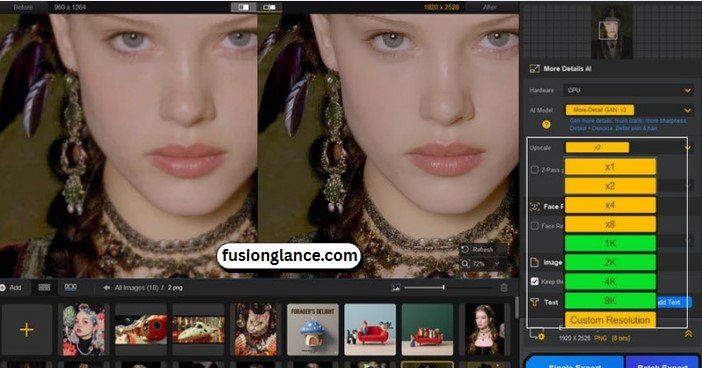
In today’s visually driven digital landscape, image quality plays a defining role in how individuals and brands communicate online. Whether it is a professional photographer perfecting a portfolio, a business improving product images, or a social media creator striving for eye-catching visuals, clarity and detail matter more than ever. This is where AI image enhancer software has emerged as a groundbreaking solution. By leveraging advanced artificial intelligence and machine learning algorithms, this technology can transform ordinary images into high-resolution, visually compelling assets within seconds.
As digital competition grows, users are increasingly seeking tools that combine efficiency with precision. AI-powered image enhancement offers exactly that—automated improvements without requiring deep technical expertise. From reducing noise and sharpening details to restoring old photographs, modern software is redefining what is possible in digital imaging.
This comprehensive guide explores how AI image enhancer software works, why it is gaining rapid adoption, and how it is shaping the future of photography, marketing, and creative workflows.
Understanding AI Image Enhancer Software
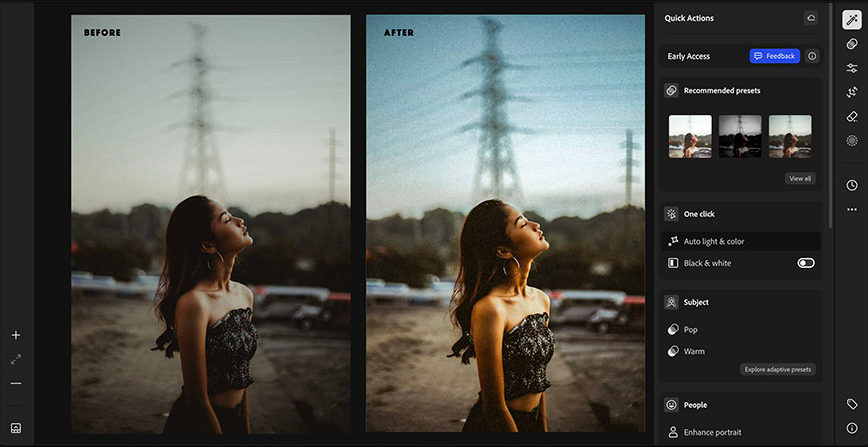
AI image enhancer software refers to digital tools designed to automatically improve the quality of images using artificial intelligence. Unlike traditional editing tools that require manual adjustments, these platforms analyze images at a pixel level and apply intelligent corrections in real time.
The software relies on deep learning models trained on millions of images. These models learn patterns related to lighting, texture, color balance, and sharpness. When a user uploads a photo, the system compares it with learned data and reconstructs missing details while minimizing distortions.
One of the most remarkable aspects of AI-driven enhancement is its ability to upscale images without sacrificing clarity. Historically, enlarging a photo led to pixelation, but AI can now generate realistic details that appear naturally captured.
Because of these capabilities, AI image enhancer software has become an essential tool for professionals and casual users alike.
People can read this: Epstein File: Unveiling Jeffrey Epstein’s Ties to the Scientific Community
The Evolution of Image Enhancement Technology
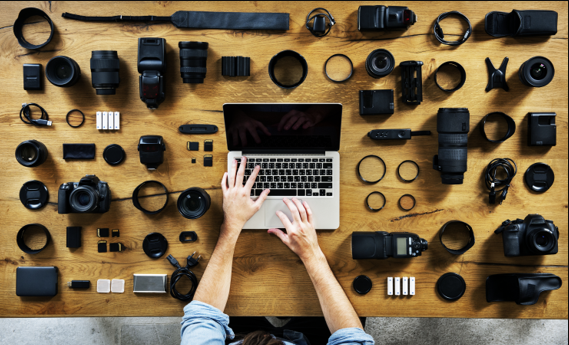
Image editing has come a long way from early manual techniques. Previously, improving a photograph required advanced skills in professional software, often demanding hours of meticulous work.
The introduction of AI marked a turning point. Instead of manually adjusting brightness, contrast, and sharpness, intelligent systems began performing these tasks automatically.
Early versions of enhancement tools focused primarily on filters and preset corrections. Modern platforms, however, go much further. They can reconstruct damaged images, remove motion blur, enhance facial features, and even predict realistic textures.
Industry research suggests that AI-powered creative tools have seen adoption rates increase dramatically in recent years, largely due to the growing demand for high-quality visuals across digital channels. As remote work, e-commerce, and content creation expand, so does the need for reliable image optimization tools.
How AI Image Enhancer Software Works
At its core, AI image enhancer software operates through neural networks that simulate human visual perception. These networks evaluate an image holistically while also examining micro-level details.
When processing a photo, the software typically performs several intelligent actions simultaneously. It detects noise and removes unwanted artifacts. It sharpens edges to improve definition. It adjusts lighting dynamically to create balance. It restores color accuracy by analyzing tonal inconsistencies.
Another significant function is super-resolution enhancement. This process involves generating new pixels based on contextual understanding rather than simply stretching existing ones. The result is a larger image that maintains impressive clarity.
Facial recognition technology further refines portraits by enhancing skin texture, improving eye sharpness, and balancing shadows. These subtle adjustments produce natural-looking results rather than overly edited appearances.
Such automation saves time while delivering professional-grade output.
People can read this: 404.594.9134: Everything You Need to Know About This Number
Key Benefits of AI Image Enhancer Software
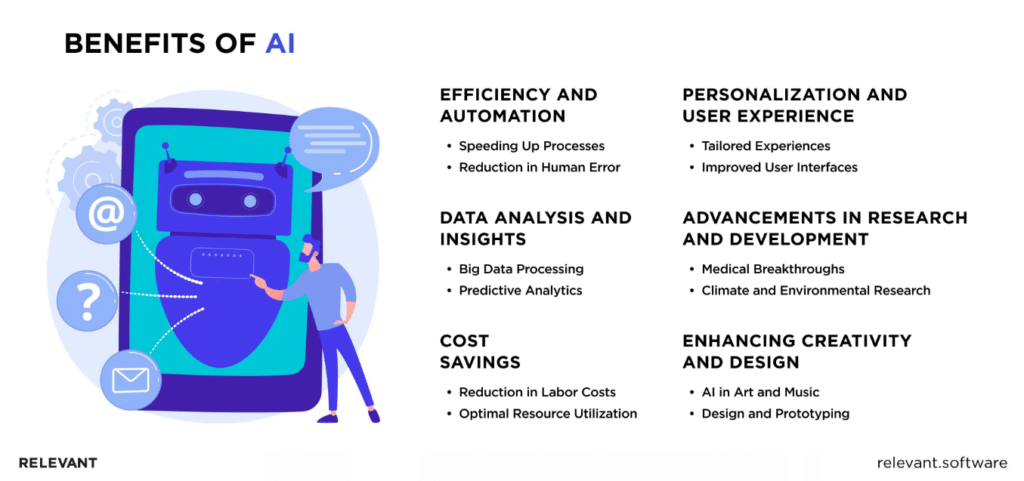
One of the primary reasons for the growing popularity of AI image enhancer software is its ability to simplify complex editing workflows. Users no longer need extensive design knowledge to achieve high-quality results.
Improved efficiency stands out as a major advantage. Tasks that once took hours can now be completed in moments. For businesses operating in fast-paced environments, this speed translates into higher productivity.
Consistency is another powerful benefit. AI tools apply uniform standards across large batches of images, ensuring a cohesive visual identity for brands.
Accessibility also plays an important role. Many platforms feature intuitive interfaces that make advanced editing approachable for beginners.
Perhaps most importantly, enhanced visuals can significantly impact engagement. Studies consistently show that high-quality images attract more clicks, increase retention, and improve conversion rates in digital marketing campaigns.
Why Businesses Are Adopting AI Image Enhancer Software
Modern businesses operate in a visual-first economy. Product photos, advertisements, website graphics, and social media posts all rely heavily on image quality.
AI image enhancer software helps companies present their offerings in the best possible light without maintaining large design teams. Retailers, for example, can quickly refine product images to highlight textures and colors accurately, leading to stronger customer trust.
Real estate professionals benefit from enhanced property photos that appear brighter and more inviting. Meanwhile, travel companies use AI tools to bring landscapes to life, inspiring potential customers.
Marketing departments also appreciate the scalability of AI enhancement. Instead of editing thousands of images manually, teams can automate improvements while maintaining professional standards.
This combination of speed, quality, and cost-effectiveness explains why adoption continues to rise across industries.
People can read this: AI Tools for Students Free: Best Artificial Intelligence Tools to Study Smarter in 2025
AI Image Enhancer Software for Creative Professionals
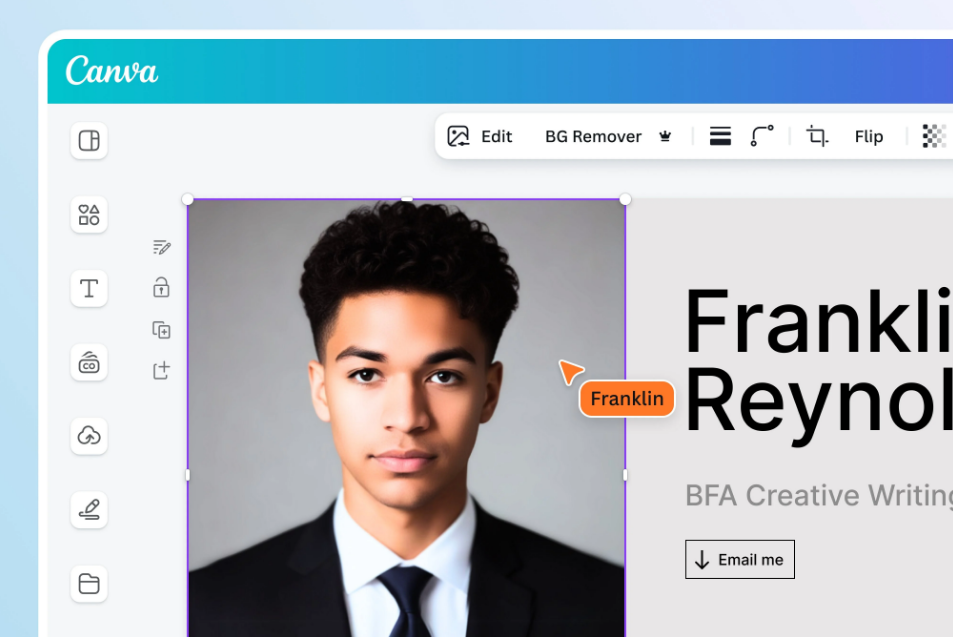
Photographers and designers often approach new technology cautiously, yet many have embraced AI enhancement as a valuable addition to their toolkit.
Rather than replacing creativity, AI supports it by handling repetitive corrections. This allows professionals to focus on artistic direction instead of technical adjustments.
For portrait photographers, AI can refine lighting and reduce imperfections while preserving authenticity. Landscape artists can recover details in shadows and highlights that might otherwise be lost.
Even illustrators and digital artists benefit from upscaling tools that maintain crisp lines when enlarging artwork for print.
The technology acts as a collaborative assistant, accelerating workflows without diminishing creative control.
People can read this: Tyvoria Drystok A Trusted Voice in Modern Lifestyle Writing
Personal Uses of AI Image Enhancer Software
While professionals gain substantial advantages, everyday users are equally discovering the value of AI-driven enhancement.
Old family photographs can be restored with surprising clarity, allowing cherished memories to be preserved for future generations. Travelers can enhance smartphone photos to reflect the beauty they witnessed in person.
Social media enthusiasts often rely on AI tools to ensure their images stand out in crowded feeds. Improved sharpness and balanced colors contribute to a polished online presence.
Because many platforms operate in the cloud, users can enhance images from virtually any device, making the process both convenient and flexible.
Security and Privacy Considerations
As with any digital tool, data protection is an important consideration when choosing AI image enhancer software. Reputable platforms implement encryption protocols and secure storage practices to safeguard uploaded files.
Users should review privacy policies to understand how images are processed and whether they are retained after enhancement. Trusted providers typically prioritize transparency and compliance with international data standards.
Selecting reliable software not only protects sensitive visuals but also reinforces confidence in the editing process.
Choosing the Right AI Image Enhancer Software
Finding the ideal solution depends largely on individual needs. Some users prioritize speed, while others seek advanced customization.
Performance is often determined by the sophistication of the AI model. More advanced systems tend to deliver sharper results with fewer artifacts.
Compatibility also matters. Software that integrates seamlessly with existing workflows can significantly reduce friction.
User experience should not be overlooked. A clean interface and responsive design make enhancement far more enjoyable.
Finally, customer support and regular updates indicate a platform’s long-term reliability.
Carefully evaluating these factors ensures that users invest in technology capable of evolving alongside their creative or professional goals.
The Role of Machine Learning in Image Quality Improvement
Machine learning lies at the heart of AI image enhancer software. By continuously analyzing new data, algorithms become increasingly accurate over time.
This adaptive capability means enhancements grow more realistic with each iteration. Shadows appear more natural, textures gain depth, and color transitions become smoother.
The self-improving nature of machine learning ensures that the technology remains future-ready, capable of meeting rising expectations for visual excellence.
AI Image Enhancement and SEO Impact
High-quality visuals do more than please the eye; they also influence search performance. Optimized images contribute to faster page loading times and improved user engagement, both of which are important ranking factors.
Enhanced photos can reduce bounce rates by encouraging visitors to stay longer. They also increase the likelihood of shares, strengthening overall visibility.
When paired with proper alt text and compression techniques, AI-enhanced images support a well-rounded SEO strategy.
Ethical Considerations in AI-Based Editing
As enhancement tools grow more powerful, ethical discussions have emerged regarding authenticity. While improving clarity is widely accepted, excessive manipulation can blur the line between enhancement and misrepresentation.
Responsible use involves maintaining realism, particularly in journalism and documentary photography. Transparency helps preserve trust between creators and audiences.
By approaching AI thoughtfully, users can enjoy its benefits while upholding integrity.
Future Trends in AI Image Enhancer Software
The trajectory of AI image enhancer software suggests even greater innovation ahead. Real-time enhancement during photo capture is becoming increasingly feasible, allowing users to see optimized results instantly.
Integration with augmented reality could further redefine visual storytelling. Meanwhile, advancements in generative AI may enable tools to reconstruct missing elements with astonishing precision.
Experts anticipate that automation will continue to expand, making professional-grade editing accessible to virtually everyone.
As computing power grows and algorithms evolve, the boundary between captured and enhanced imagery will continue to narrow.
Challenges and Limitations
Despite its impressive capabilities, AI enhancement is not without challenges. Over-processing can sometimes produce unnatural textures if settings are not carefully balanced.
Extremely low-quality images may still present difficulties, as even advanced models rely on some original data to generate accurate reconstructions.
Additionally, users should remain mindful of file sizes when working with ultra-high-resolution outputs.
Understanding these limitations allows for more realistic expectations and better results.
Building Trust Through E-E-A-T Principles
Experience, expertise, authoritativeness, and trustworthiness are essential qualities for any technology-focused content. AI image enhancer software providers that demonstrate these attributes tend to earn stronger user loyalty.
Clear documentation, educational resources, and responsive support all contribute to credibility. Likewise, transparent communication about capabilities and constraints fosters long-term confidence.
For users, choosing established platforms with proven track records is often the safest approach.
Conclusion
AI image enhancer software represents a transformative shift in digital imaging. By combining intelligent automation with powerful machine learning, it empowers users to achieve remarkable visual quality without extensive technical knowledge.
From businesses seeking stronger branding to individuals preserving treasured memories, the applications are vast and continually expanding. As the technology advances, it promises to make high-end editing faster, more accessible, and increasingly precise.
Embracing AI-driven enhancement is no longer just an option for forward-thinking creators; it is quickly becoming a necessity in a world where visual communication defines success. Those who adopt it early position themselves at the forefront of a rapidly evolving digital era.
FAQs
What is AI image enhancer software used for?
AI image enhancer software is used to automatically improve photo quality by sharpening details, reducing noise, correcting colors, and increasing resolution.
Is AI image enhancement suitable for beginners?
Yes, most platforms are designed with user-friendly interfaces, allowing beginners to enhance images without prior editing experience.
Can AI restore old or damaged photos?
Many advanced tools can repair scratches, adjust fading, and reconstruct missing details, making them ideal for photo restoration.
Does AI image enhancer software affect SEO?
Enhanced images can improve user engagement and site performance, indirectly supporting better search rankings.
Is AI enhancement better than manual editing?
AI excels at speed and consistency, while manual editing offers artistic control. Many professionals use a combination of both for optimal results.